Ad Iesum per Mariam — “To Jesus through Mary”

THEOTOKOSMater Dei · Mother of God

Discover · Saints & witnesses

Lives shapedby the Mother of God

Every Marian devotion has a face. These eight saints are remembered here because the Mother of God shaped their whole existence and because, together, they tell you what the treasury of Mary looks like when it is lived.

A cloud of witnesses

Eight saints — visionaries, martyrs, a pope, a missionary of the Rosary, and a teenager with a laptop.

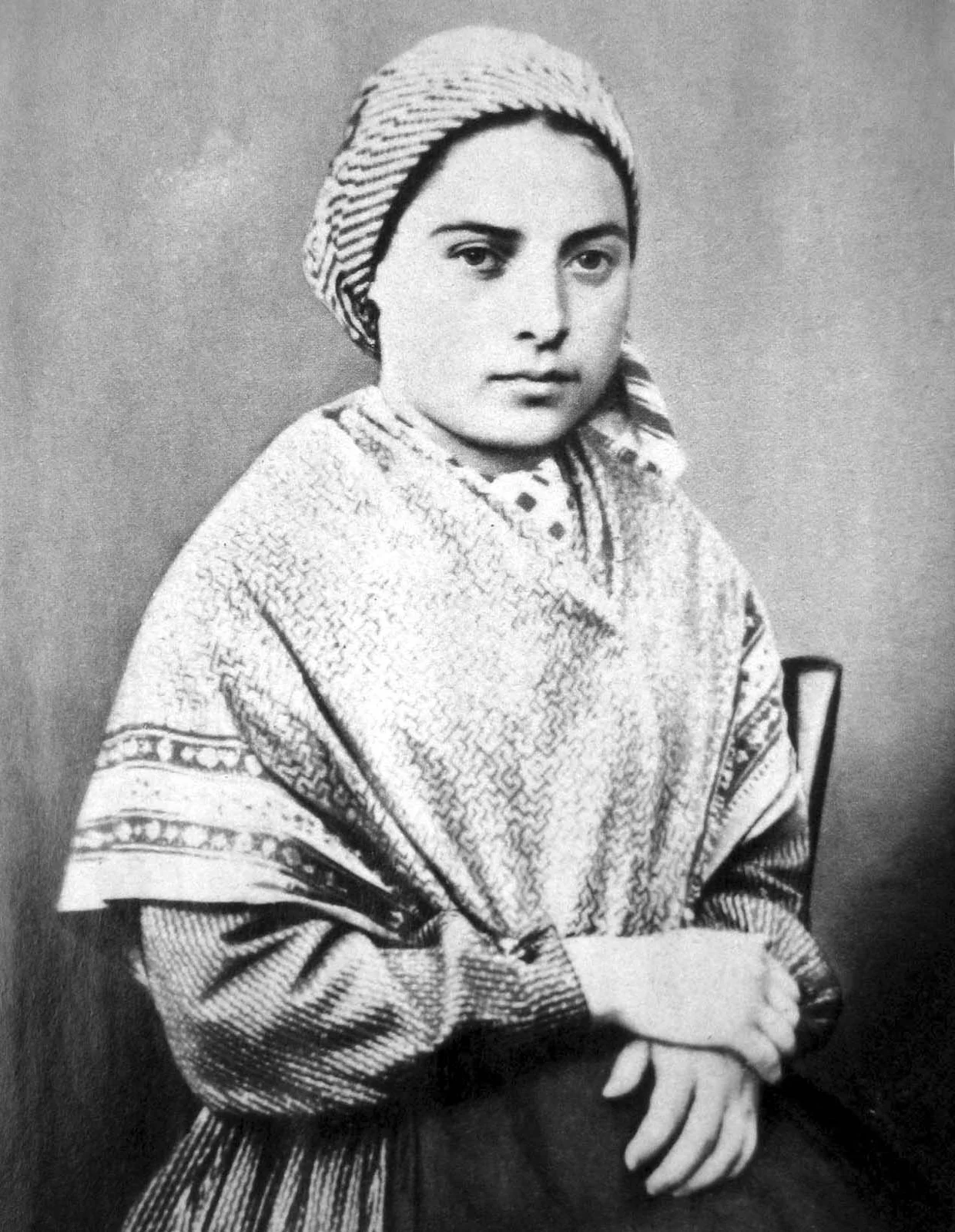
  1. Portrait of St. Bernadette Soubirous

    1844 – 1879

    Lourdes, France

    abbé P. Bernadou · Public domain

    Resized and converted to WebP; no crop.

    Image source · Wikimedia Commons

    Visionary of the Immaculate Conception

    St. Bernadette Soubirous

    A fourteen-year-old shepherd girl who could not yet read the catechism, and to whom the Mother of God confided her own most secret name.

    Bernadette was born into a poor miller’s family in Lourdes. Gathering firewood near Massabielle on 11 February 1858, she reported seeing a lady; eighteen encounters followed through 16 July. The sanctuary’s chronology records that on 25 March the lady identified herself as the Immaculate Conception. Bernadette later joined the Sisters of Charity at Nevers, where she lived a hidden life of prayer and service amid serious illness. She died in 1879, aged thirty-five. Her body is venerated in the chapel of Saint-Gildard.

    Bernadette’s witness points beyond herself to prayer, conversion and trust in God.

    St. Bernadette Soubirous

    Editorial reflection · Lourdes sanctuary, chronology of the eighteen apparitions

    Canonized by Pius XI, 8 December 1933 · feast 16 April
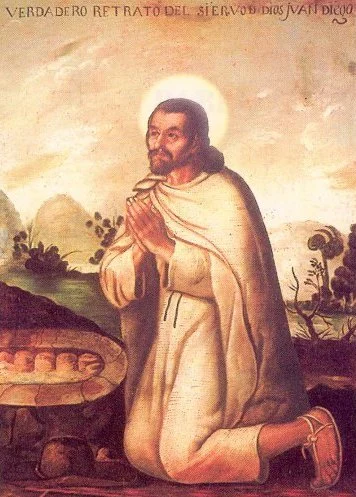
  2. Portrait of St. Juan Diego Cuauhtlatoatzin

    1474 – 1548

    Tepeyac, Mexico

    Miguel Cabrera · Public domain

    Resized and converted to WebP; no crop.

    Image source · Wikimedia Commons

    First indigenous saint of the Americas

    St. Juan Diego Cuauhtlatoatzin

    The Nahua widower to whom the Mother of God appeared as one of his own people — and left her portrait miraculously imprinted on his tilma.

    Juan Diego is remembered as the indigenous messenger in the Guadalupe narrative. The Nican Mopohua recounts his encounters with Mary at Tepeyac, her request for a church and the sign of flowers carried in his tilma before the bishop. The image is now venerated in the Basilica of Guadalupe. The account was first printed in 1649; its transmission and historical context are discussed in our Guadalupe entry. His canonization in 2002 honours his holiness without making every popular detail of the story an article of faith.

    “Am I not here, I, who am your mother?”

    Mary in the Guadalupe narrative

    Nican Mopohua, §119 · English rendering hosted by David K. Jordan, UC San Diego; first printed in 1649

    Canonized by St. John Paul II, 31 July 2002 · feast 9 December

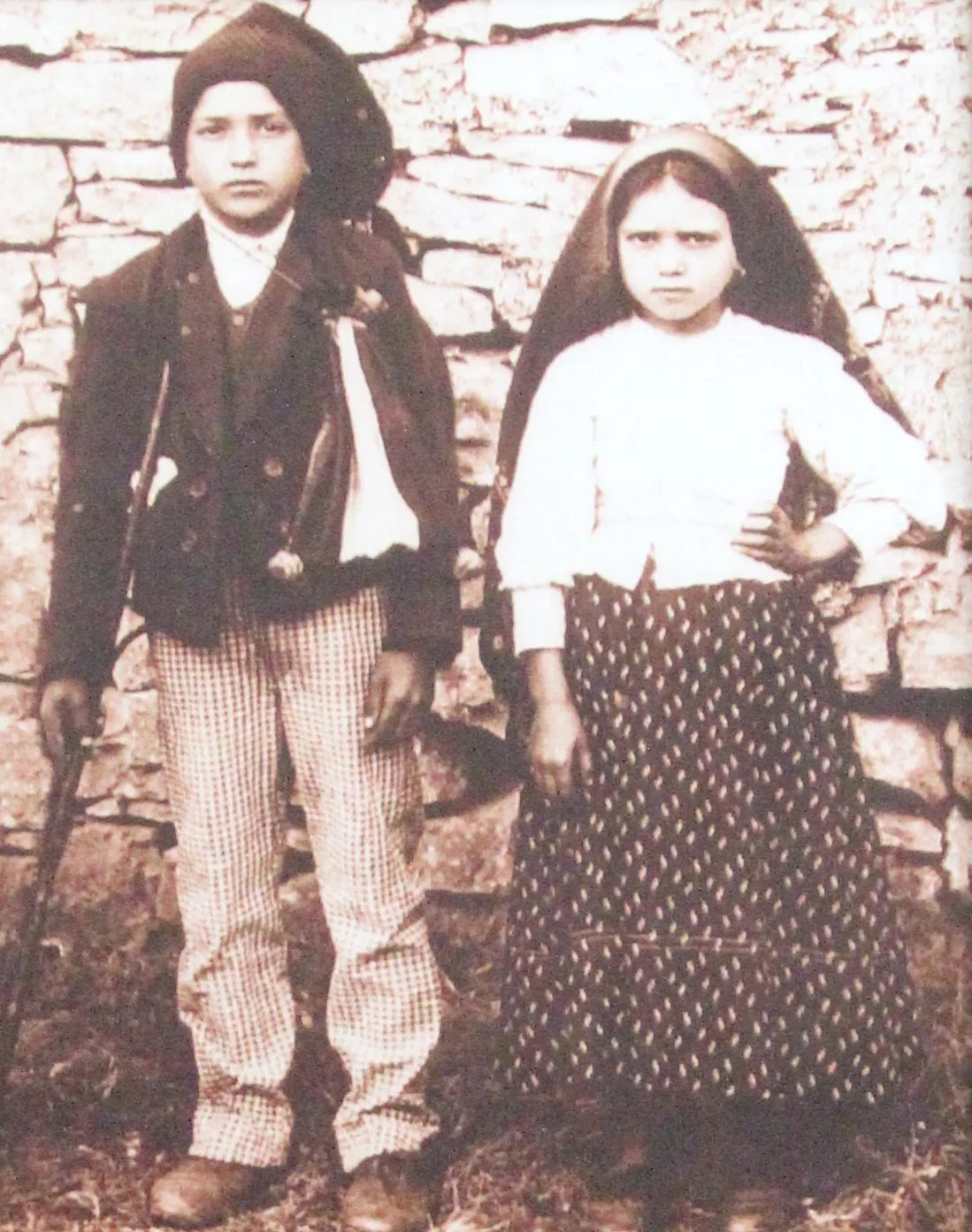
  3. Portrait of Sts. Francisco & Jacinta Marto

    1908–1919 · 1910–1920

    Fátima, Portugal

    Fallaner · Public domain

    Resized and converted to WebP; no crop.

    Image source · Wikimedia Commons

    Youngest non-martyr saints of the Church

    Sts. Francisco & Jacinta Marto

    A brother and sister of nine and seven, shepherds of Aljustrel, to whom the Lady of the Rosary confided the message of Fátima.

    With their cousin Lúcia, Francisco and Jacinta reported six Marian encounters between May and October 1917. Most took place at the Cova da Iria; the August encounter was at Valinhos. Their response centred on the Rosary, prayer for sinners and care for others. Both died young after illness during the influenza pandemic. John Paul II’s beatification homily presents Francisco’s desire to console Jesus and Jacinta’s generous concern for sinners. Their remains rest in the basilica at Fátima, alongside Lúcia’s.

    “I was thinking of Jesus who is so sad because of the sins that are committed against him”

    St. Francisco Marto

    Recollected words of Francisco · quoted by John Paul II, Beatification homily, 13 May 2000, §2

    Canonized by Pope Francis at Fátima, 13 May 2017 · feast 20 February

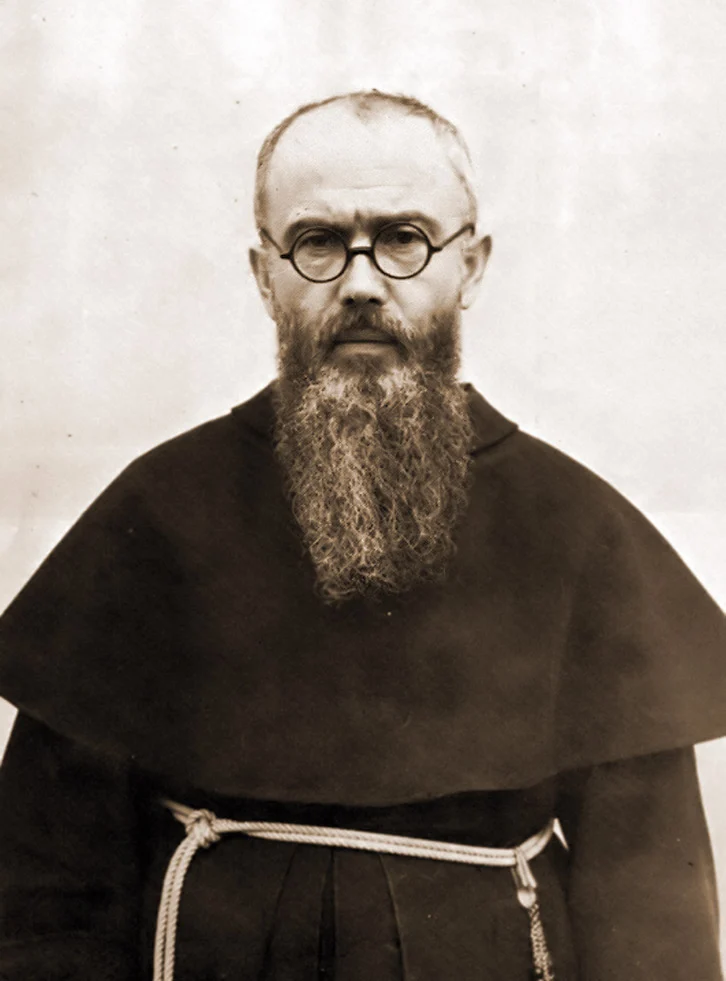
  4. Portrait of St. Maximilian Kolbe

    1894 – 1941

    Poland · Auschwitz

    Unknown photographer · Public domain

    Resized and converted to WebP; no crop.

    Image source · Wikimedia Commons

    Martyr of Auschwitz · Knight of the Immaculata

    St. Maximilian Kolbe

    The Polish Conventual Franciscan who founded the Militia of the Immaculata and gave his life in the starvation bunker to save a fellow prisoner.

    A Conventual Franciscan with a deep Marian devotion, Kolbe founded the Militia Immaculatae in Rome in 1917, established Niepokalanów in Poland and undertook missionary work in Japan. At Auschwitz in 1941 he volunteered to take the place of a fellow prisoner condemned to starvation. He sustained the other prisoners through prayer and died on 14 August after a lethal injection. John Paul II’s canonization homily interprets this self-offering in the light of Christ’s love.

    Kolbe’s self-offering for another prisoner bears witness to the love of Christ that animated his Marian devotion.

    St. Maximilian Kolbe

    Editorial reflection · see John Paul II, Canonization homily, 10 October 1982

    Canonized by St. John Paul II, 10 October 1982 · feast 14 August

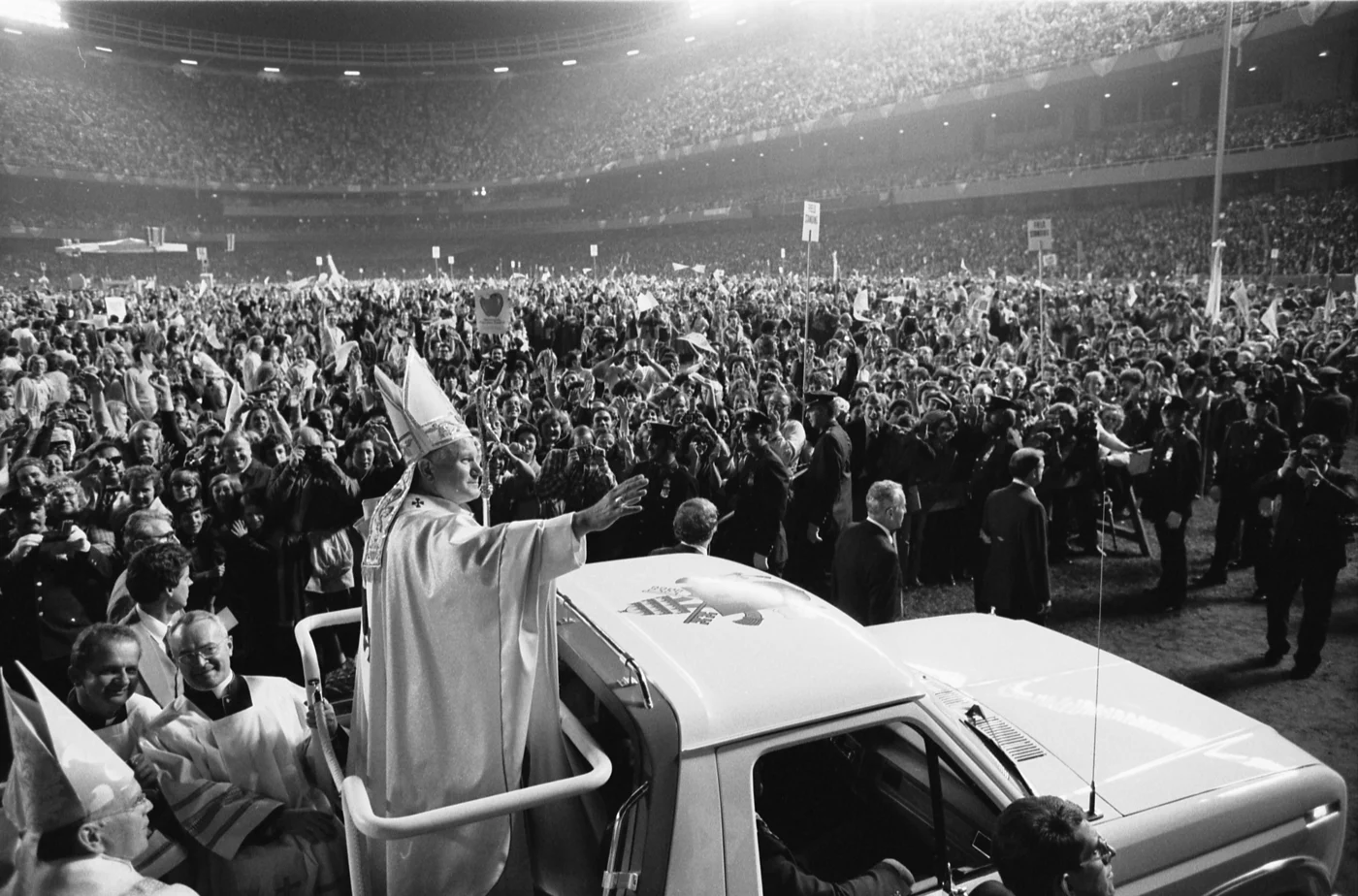
  5. Portrait of St. John Paul II

    1920 – 2005

    Wadowice, Poland · Rome

    Thomas J. O'Halloran , photographer, U.S. News & World Report magazine · Public domain

    Resized and converted to WebP; no crop.

    Image source · Wikimedia Commons

    Pope · Totus Tuus

    St. John Paul II

    The great Marian pope — theologian of the body, evangelist of two continents, and the son who consecrated the whole world to the Immaculate Heart.

    Karol Wojtyła’s Marian spirituality was deeply shaped by St. Louis de Montfort. His motto Totus tuus expressed a belonging to Jesus through Mary, not a devotion detached from Christ. As pope he wrote Redemptoris Mater and Rosarium Virginis Mariae and proposed the Luminous Mysteries of the Rosary. His homily in Washington in 1979 presents Mary as a model of trust in God amid suffering and apparent contradiction. He died on 2 April 2005, the eve of Divine Mercy Sunday.

    “From Mary, we learn to trust even when all hope seems gone.”

    St. John Paul II

    Homily, Oct 6 1979 · Cathedral of Saint Matthew, Washington

    Canonized by Pope Francis, 27 April 2014 · feast 22 October

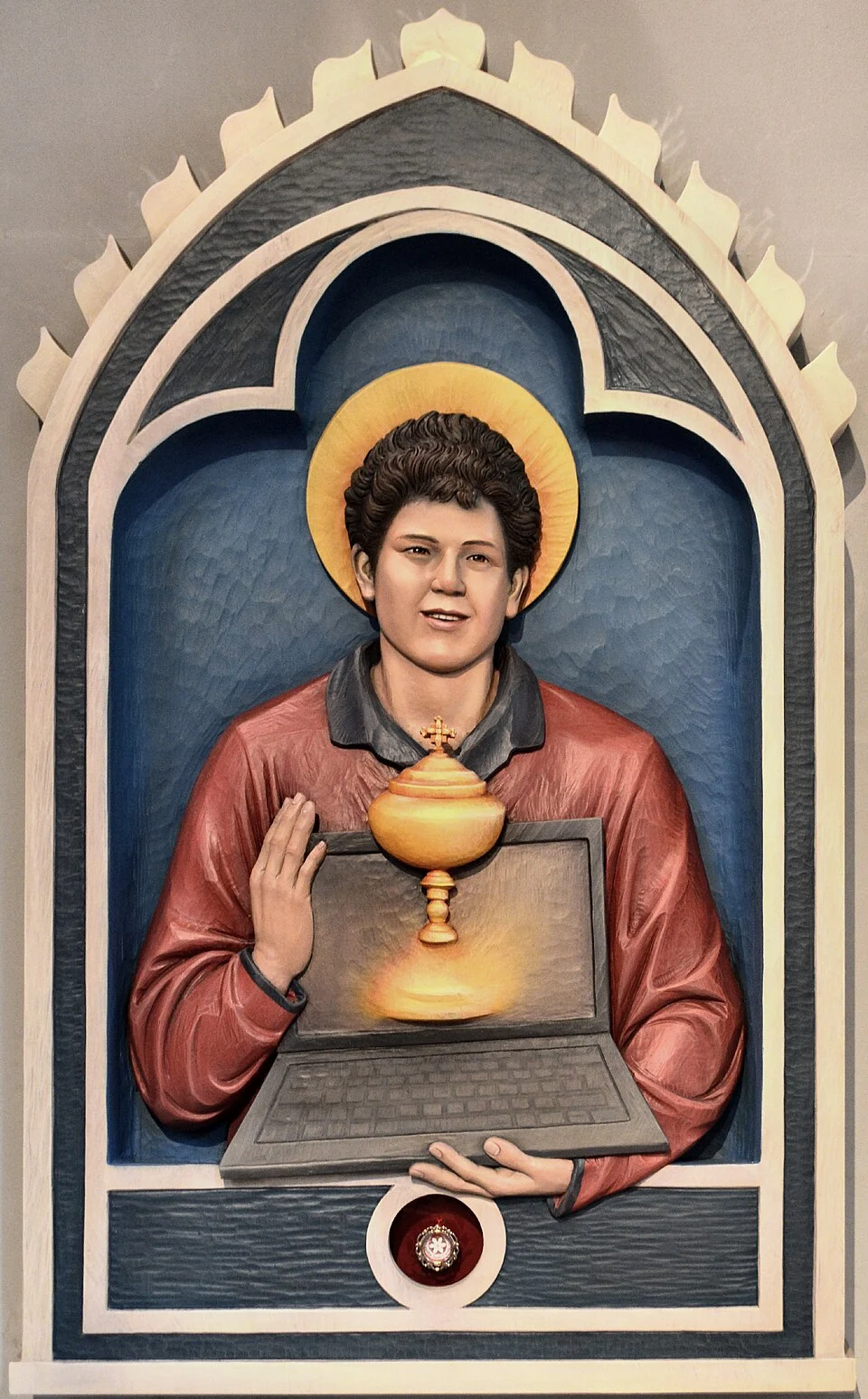
  6. Memorial of St. Carlo Acutis at Corpus Christi Church, Covent Garden

    1991 – 2006

    Milan · Assisi

    AndyScott · CC BY-SA 4.0

    Resized and converted to WebP; no crop.

    Image source · Wikimedia Commons

    The 'cyber apostle' — patron of this treasury

    St. Carlo Acutis

    A teenage Milanese boy who created an online exhibition of Eucharistic miracles, and who died of leukemia at fifteen offering his sufferings for the Pope and for the Church.

    Born and baptised in London, Carlo grew up in Milan. He enjoyed computers, video games, and ordinary friendships while making the Eucharist, daily prayer, and care for others central to his life. His online exhibition of Eucharistic miracles used technology to invite people to Christ; it is a direct inspiration for this treasury. He died of leukemia on 12 October 2006, aged fifteen. Pope Leo XIV canonized him with Pier Giorgio Frassati on 7 September 2025. The photograph here shows his memorial at Corpus Christi Church, Covent Garden, not a lifetime portrait.

    “Not I, but God”

    St. Carlo Acutis

    Saying quoted by Leo XIV · Canonization homily, 7 September 2025 · excerpt

    Canonized by Pope Leo XIV, 7 September 2025 · feast 12 October

    Holy See · Canonization homily
  7. Portrait of St. Louis-Marie Grignion de Montfort

    1673 – 1716

    Brittany & the Vendée, France

    Unknown (old devotional print) · Public domain

    Resized and converted to WebP; no crop.

    Image source · Wikimedia Commons

    Priest · missionary · apostle of the Rosary

    St. Louis-Marie Grignion de Montfort

    The wandering French missionary who taught the Church to go 'to Jesus through Mary,' and whose little book on holy slavery to Our Lady formed saints and popes.

    Born at Montfort-sur-Meu in Brittany, Louis-Marie gave away his possessions to the poor and was ordained in 1700. Barred from many pulpits for his fiery zeal, he preached parish missions across western France, rebuilding faith through the Rosary and the renewal of baptismal promises made as a total consecration to Jesus through Mary. He founded the Company of Mary and the Daughters of Wisdom, and died worn out at 43 while preaching at Saint-Laurent-sur-Sèvre. His masterwork, hidden in a chest, was found only in 1842 — and shaped the Marian devotion of St. John Paul II, whose motto Totus tuus is drawn straight from its pages.

    “For we never give more honour to Jesus than when we honour his Mother, and we honour her simply and solely to honour him all the more perfectly.”

    St. Louis-Marie de Montfort

    True Devotion to the Blessed Virgin, §94 · Montfort Missionaries translation

    Two books to read

    • True Devotion to Mary — His treatise on total consecration — ‘to Jesus through Mary.’
    • The Secret of the Rosary — A short, practical guide to praying the Rosary well.

    Canonized by Pius XII, 20 July 1947 · feast 28 April

Also read

Every apparition entry names the visionary and links to her or his life — explore the apparitions and devotions.