 ← Christos · Rex Gloriae
The Real Presence
The Eucharist & its Miracles
Panis Angelicus
The Heart of Jesus does not only appear in visions — it abides, truly, in the Blessed Sacrament. Down the centuries, when faith grew weak, God has confirmed the gift with signs.
The Solemnity of Corpus Christi · after Trinity Sunday
The Last Supper accounts identify the bread with Christ’s body and the cup with his blood (Matthew 26:26–28). The Church confesses his true, real, and substantial presence under the appearances of bread and wine — the mystery the Fourth Lateran Council named transubstantiation and the Council of Trent solemnly reaffirmed.
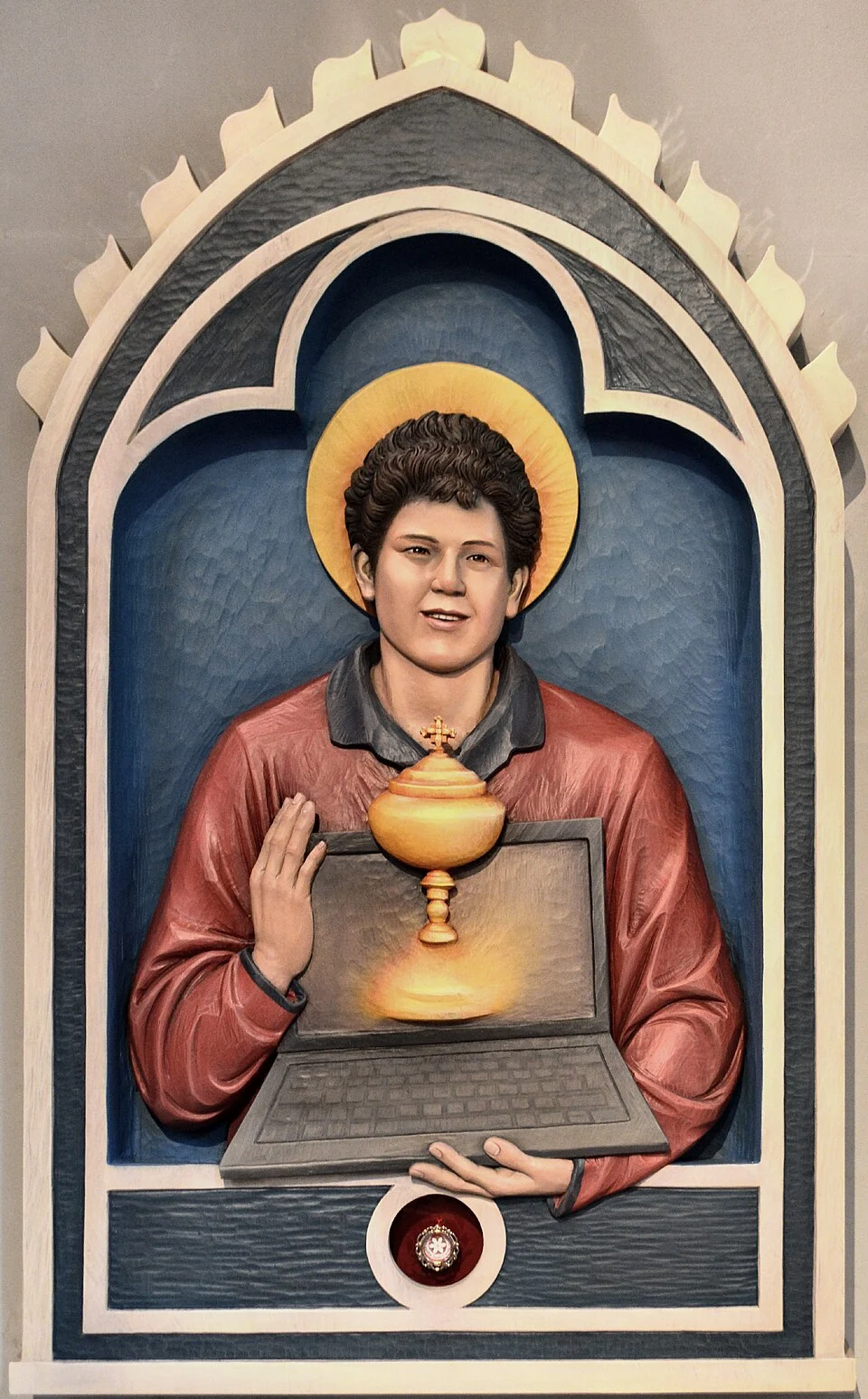
The tradition of the miracle at Bolsena is closely associated with Corpus Christi. The feast’s history also includes St. Juliana of Liège and its local institution in Liège in 1246, before Urban IV extended it to the universal Church in 1264. In our own day, St. Carlo Acutis gathered accounts of Eucharistic miracles into an online exhibition — a direct inspiration for this treasury.
Signs to strengthen faith
- 1Lanciano (8th century) — host and wine become flesh and blood.
- 2Bolsena–Orvieto (traditionally 1263) — associated with the spread of Corpus Christi.
- 3Buenos Aires (1996) — a host examined as cardiac tissue.
- 4The catalogue of St. Carlo Acutis — miracles from around the world.
- 5Eucharistic adoration — ‘My Lord and my God!’ (John 20:28, NRSV-CE).
Before the Blessed Sacrament
O Sacrament most holy, O Sacrament divine, all praise and all thanksgiving be every moment thine. My Lord and my God.
With the saints · East & West
“the flesh of our Saviour Jesus Christ, which suffered for our sins, and which the Father, of His goodness, raised up again”
This early Eastern witness joins Eucharistic faith to the reality of Jesus’ flesh, Passion and Resurrection. The sacrament is not detached from the person of the incarnate Lord.
“For He was made man that we might be made God.”
The Eastern language of divinization means sharing in God’s life by grace, not becoming another god by nature. Only the truly divine Son can give this participation in divine life.