Melkite & Byzantine Catholic tradition
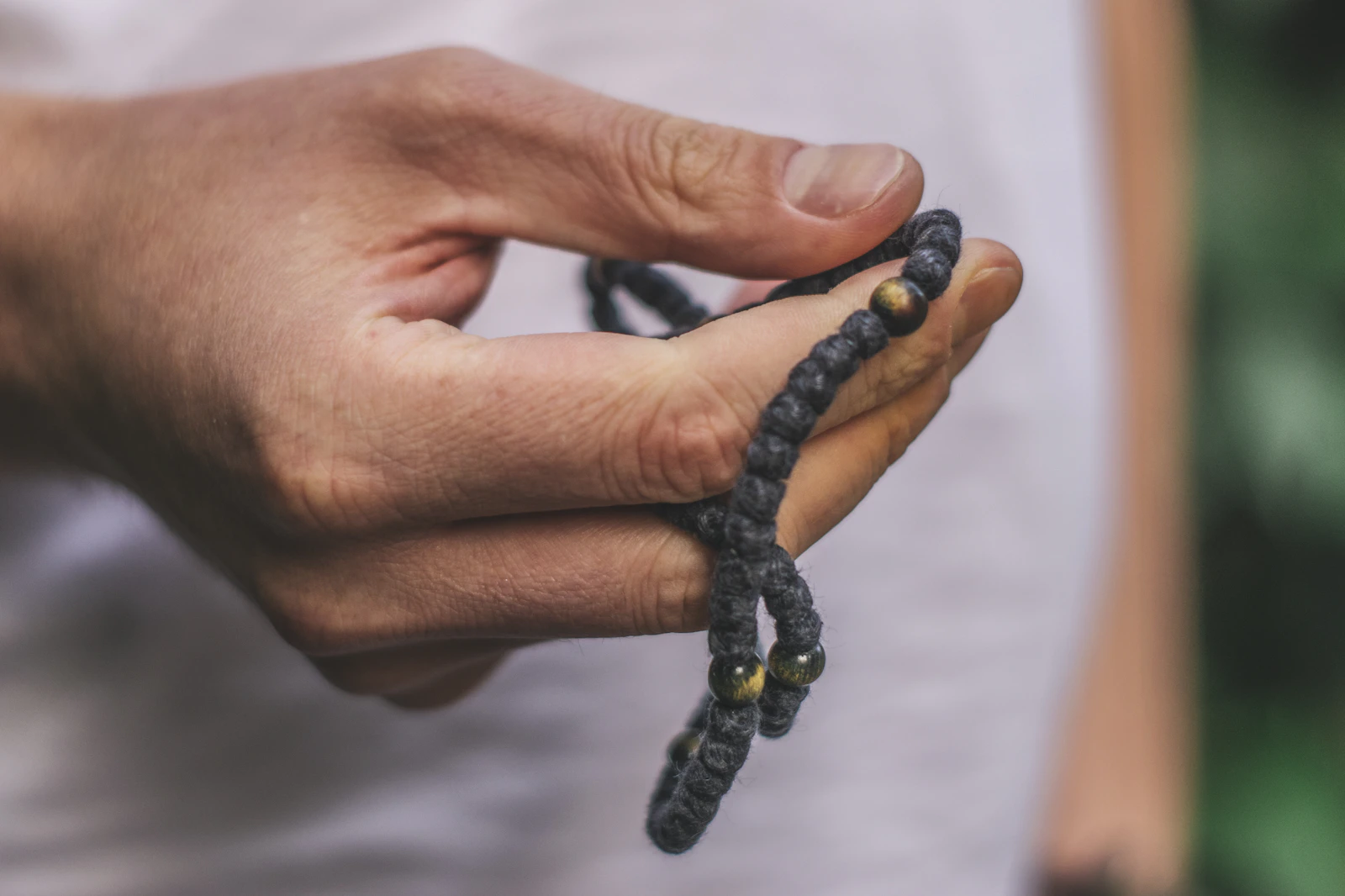
The Prayer Rope
A quiet rhythm for the hand.
A return to the mercy of Christ.
Photograph: Michael Walk / Unsplash · The wearer’s denomination is not identified.
The prayer of the heart
A name, a confession, a plea for mercy
A small cord can carry a large invitation. In the Melkite Greek Catholic and wider Byzantine traditions, a prayer rope helps the hand accompany the heart’s invocation of Jesus. It is commonly called a komboskini in Greek or a chotki in Slavic usage. The knots provide a quiet rhythm, leaving the mind freer to attend to the prayer rather than keep a mental tally.
The Jesus Prayer joins a confession of faith to a plea for mercy. ‘Lord Jesus Christ, Son of God’ names the person to whom we turn. ‘Have mercy on me, a sinner’ recalls the humility of the publican in Luke 18:13 and the cries for help addressed to Jesus in the Gospels. The words are not a formula that forces a result: they are an encounter with the living Christ.
The apostolic invitation to pray without ceasing does not mean abandoning work, family, or attention to a person speaking to us. A remembered prayer can instead make us more present. Its fruit is not a higher tally, but a life more available to God and to our neighbour.
“Lord Jesus Christ, Son of God, have mercy on me, a sinner.”
Recording not yet available
Can you sing this prayer? Volunteer singers and choirs are warmly invited to contribute a recording for this free prayer treasury. Please use the published prayer text and contact us about sharing a recording you own and permit us to use.
Offer a recording01 · A living inheritance
From the desert to the ordinary day
The history of short prayer is better documented than the invention of the rope. The milestones below distinguish surviving texts, later devotional traditions, and the communities that transmit them.
4th century · the desert
Monastic roots; later origin traditions
St. Anthony and St. Pachomius
The rope belongs to the world of early Christian monasticism: lives shaped by Scripture, work, watchfulness, and repeated prayer. Later traditions associate it with St. Pachomius, an organizer of communal monastic life, and St. Anthony the Great. Those associations are meaningful devotional memories, not a surviving contemporary patent for the object in our hands.
A familiar story tells of knots repeatedly undone by the devil until a holy monk is taught an interwoven cross-shaped knot. Versions differ about the monk and the heavenly helper. The Athonite reflection openly places the rope’s beginnings in an obscure past. We therefore tell the account as tradition, without claiming that a securely dated apparition established one required knot design.
Early 5th century
A surviving written witness
St. John Cassian and a short cry for help
In Conference 10, chapter 10, Cassian presents Abba Isaac teaching a short verse: ‘O God, make speed to save me: O Lord, make haste to help me.’ This is C. S. Gibson’s historical translation (1894), as edited at New Advent, not an RSV-CE quotation. It is to accompany the monk in difficulty and in prosperity, while working, travelling, settling down to sleep, and waking. This is direct evidence of a disciplined tradition of brief, repeated Christian prayer.
Cassian’s text does not describe today’s 33-knot bracelet or prescribe the later, familiar wording of the Jesus Prayer. Its importance is deeper: a short invocation can gather a scattered mind and return it to God. The history of the prayer and the history of the object that helps count it are related, but they are not identical.
Early Byzantine centuries
A developing spiritual tradition
The name of Jesus and the school of Sinai
Writers associated with the prayer of the heart include Diadochos of Photiki and St. John Climacus of Sinai, whose Ladder of Divine Ascent became a major monastic text. Climacus urges recourse to the name of Jesus in spiritual struggle. These witnesses belong to a long formation of Christian watchfulness, not to a single moment when every word and knot was fixed.
The Catechism (§2667) identifies Sinai, Syria, and Mount Athos as important channels through which invocation of Jesus’ name was transmitted. Its example uses ‘have mercy on us sinners’; many personal prayer rules use ‘have mercy on me, a sinner.’ A shared confession of Christ can be expressed through more than one received wording.
14th century
Received in Melkite catechesis
St. Gregory Palamas and sacred stillness
Gregory Palamas (1296–1359), an Athonite monk and later archbishop of Thessaloniki, defended hesychasm: a tradition of stillness directed toward communion with God. Official Melkite catechesis presents his teaching as part of its own spiritual inheritance. The point is not to manufacture an experience, but to become receptive to divine grace.
The word hesychia means stillness or silence. It does not mean that every Christian who whispers the Jesus Prayer must practise advanced bodily methods. Technical disciplines require experienced guidance. Neither a breathing exercise nor a very large number of repetitions is a shortcut to holiness.
18th & 19th centuries
Transmission through books and teachers
The Philokalia and The Way of a Pilgrim
The Philokalia, a collection of earlier spiritual writings associated with Nicodemus the Hagiorite and the late-eighteenth-century revival of Byzantine spirituality, helped carry this inheritance to new readers. The anonymous Russian classic The Way of a Pilgrim later made the longing to pray without ceasing vivid through the story of a traveller and his spiritual guide.
Russian Orthodox teachers such as Theophan the Recluse also guided readers in attentive prayer. These works are important witnesses to a shared Eastern heritage; their authors and settings should be named accurately, not silently treated as official Melkite rulebooks. The Pilgrim’s large prayer counts belong to a particular story of guidance, not a target a beginner must imitate.
In ordinary life today
Living Eastern Christian practice
A monastic gift carried beyond the monastery
Komboskini is a familiar Greek name; chotki or chōtki is common in Slavic contexts. Melkite Catholics receive the Jesus Prayer within a wider Byzantine life of Divine Liturgy, Scripture, fasting, charity, and devotion to the Theotokos. There is no single exclusively Melkite knot count or colour that every believer must own.
A rope in a pocket can become a modest reminder during an ordinary day: before a difficult conversation, after receiving troubling news, or in a quiet moment at home. It need not advertise an achievement. Its purpose is fulfilled when attention moves beyond the object to Christ and when prayer becomes patience, reconciliation, and care for another person.
02 · The object in the hand
Knots, wool, and the sign of the cross
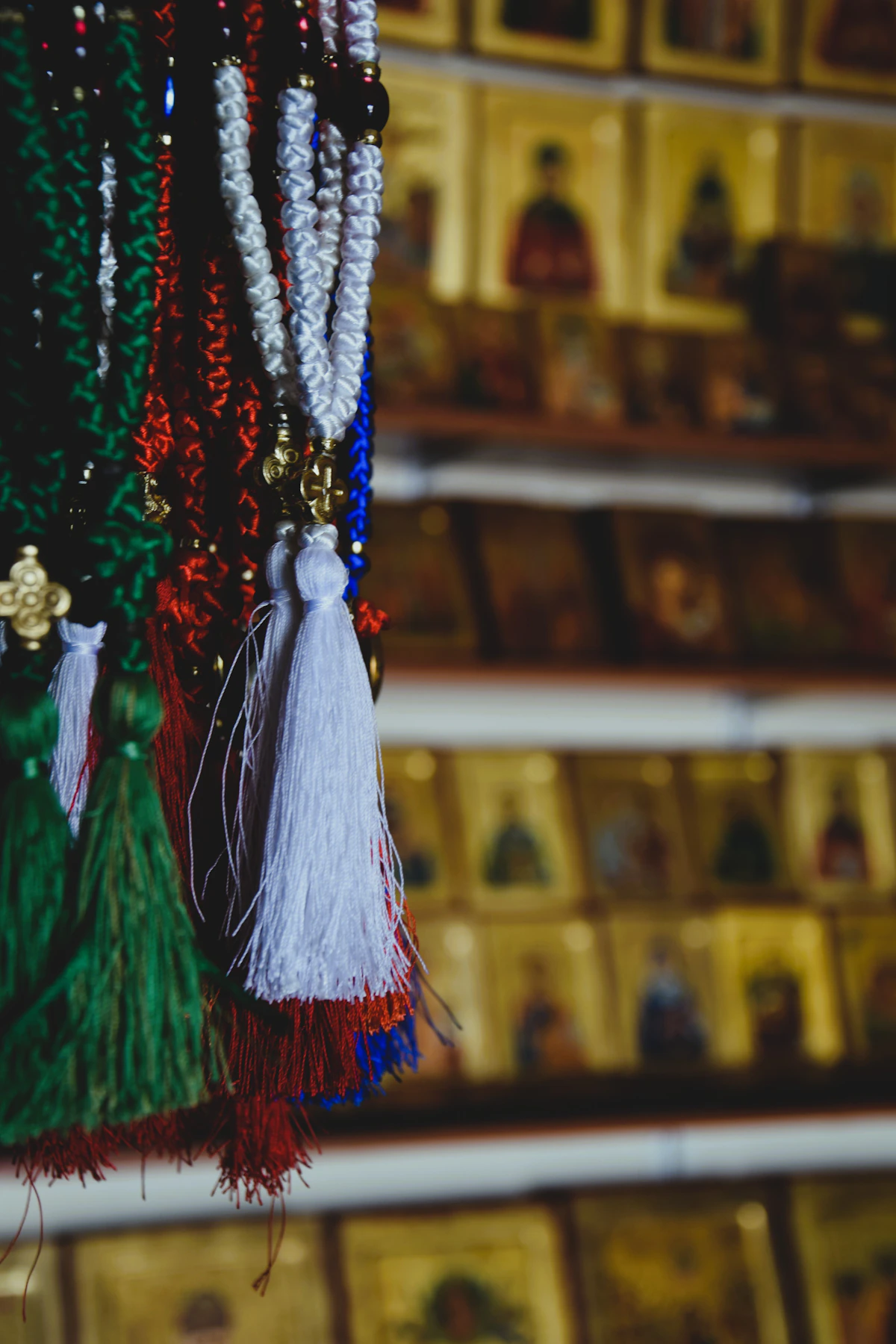
An example of varied colours and tassel styles, not a specification for every community’s prayer rope.
Photograph via UnsplashUnsplash License- Wool and other materials
- Traditional wool recalls the flock of the Good Shepherd. Silk and synthetic cord are also used; some prayer aids use beads. A material’s symbolism can teach, but the fibre does not give the prayer special power.
- Knots shaped through crosses
- Many ropes use interwoven knots understood devotionally through the sign of the cross. Methods and explanations vary. ‘Microscopic crosses’ is not a technical requirement, and no single advertised number of interlacings makes a rope spiritually superior.
- 33, 50, and 100
- These are common sizes, not universal rules. Thirty-three is often associated devotionally with Christ’s earthly life; fifty and one hundred are convenient counts. Spacers and the cross may be counted differently by makers, so check the actual praying knots.
- The cross, markers, and tassel
- A cross marks Christ’s victory; marker beads can help the fingers find their place. A tassel is traditionally associated with tears of repentance. It does not wash away sins by contact. Some ropes have no tassel, and colours or forms vary.
03 · A gentle beginning
Praying with the rope
Begin simply
Choose a quiet moment. Stand or sit comfortably and reverently; make the sign of the cross if that is your practice. You may begin with your usual prayers. There is no single opening sequence imposed on every lay person.
One knot, one attentive invocation
Hold the cord gently and move to the next knot after each Jesus Prayer. Either hand can be used. Pray quietly or inwardly, allowing the words to be heard by the heart rather than rushed to finish the rope.
Return without fighting yourself
When attention wanders, return gently to the words. Do not chase lights, sensations, or imagined visions. Ordinary distraction is not a command to restart a count or a verdict that the whole prayer was worthless.
Keep a modest measure
A few unhurried minutes can be a reasonable beginning. A rope is helpful, not essential. Ask your priest or spiritual guide about a sustainable prayer rule rather than copying an advanced monastic count from a book or a social-media post.
Carry the prayer into love
End with thanksgiving and return to what love requires next. Prayer must not make driving, crossing a road, work, or caring for someone unsafe: leave the rope aside whenever a task needs your full attention and both hands.
04 · Distinct gifts, one Lord
The prayer rope and the Rosary
Prayer rope
An invocation that gathers the heart
The Jesus Prayer repeatedly turns toward Christ’s name and mercy. In its characteristic Byzantine practice, attention rests in the words and their meaning rather than moving through a sequence of imagined Gospel scenes.
Holy Rosary
Contemplating Christ with Mary
The Rosary accompanies the Hail Mary with contemplation of the mysteries of Christ. Its Gospel scenes invite remembrance, understanding, conversion, and prayer with the Mother of God.
They can enrich the same life without becoming one hybrid rule. The prayer rope offers a simple return to Christ; the Rosary dwells on his saving mysteries with Mary. Neither replaces Divine Liturgy or Mass, the other sacraments, or the duties of love. Eastern Catholics need not adopt a Latin devotion in order for their own inheritance to be complete.
One possible rhythm—not an obligation
A few quiet Jesus Prayers in the morning; a brief return to them during the day; a Rosary in the evening, or on days when you can give its mysteries unhurried attention. Someone else may keep a different rhythm. Begin with what is faithful and sustainable, not with a programme that becomes a source of pressure.
Print & carry · 5 languages
A Jesus Prayer card for your parish
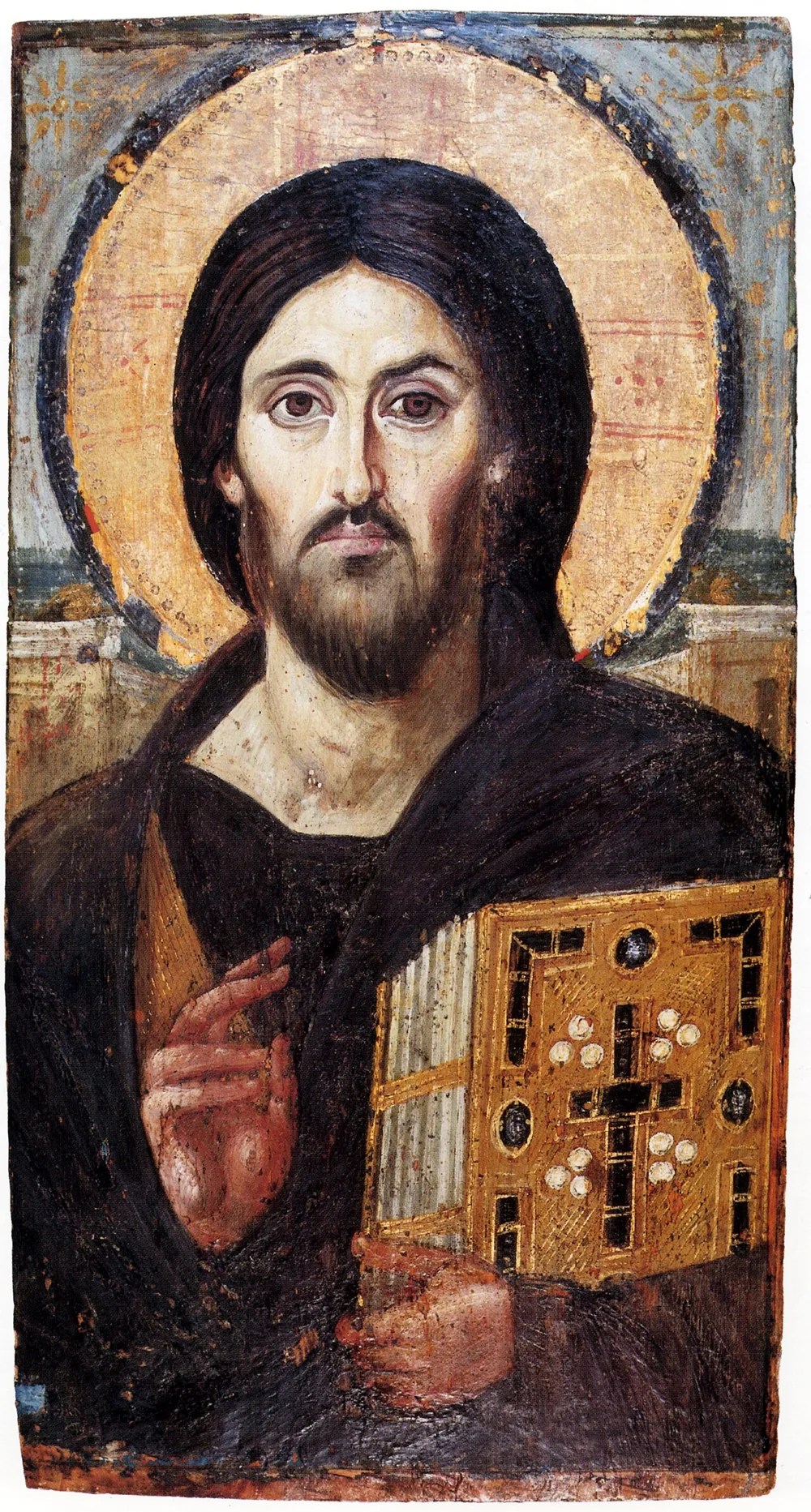
Give the prayer of the heart a home in the pocket: the Jesus Prayer with its shorter forms, a gentle way to pray it on the rope, and its root in the Gospel — beneath the ancient icon of Christ the Merciful. Choose English, Spanish, French, Arabic or Chinese, then print it as a holy card to hand out, or as a full page for the icon corner.
Print language
Recording not yet available
Can you sing this prayer? Volunteer singers and choirs are warmly invited to contribute a recording for this free prayer treasury. Please use the published prayer text and contact us about sharing a recording you own and permit us to use.
Offer a recordingHoly card prints 2 per page with a matching back (shrine name & blessing) — print double-sided. Allow pop-ups if nothing appears.
05 · Honest questions
Beginning without fear or fuss
No. The Jesus Prayer is part of Eastern Catholic as well as Orthodox life, and the Catholic Catechism explicitly commends invocation of Jesus’ name. Lay people can pray it. Receiving a tradition respectfully includes learning from its living Church, not treating it as an exotic technique.
Reading further · reviewed September 2026
Sources and their scope
This is an introductory historical and devotional guide, not a claim that every stage of the rope’s development can be dated precisely. Catholic teaching, Orthodox witnesses, and personal reflections are identified separately. Online discussions and retailers are not authorities for doctrine or spiritual obligations.
Catholic teaching
Catechism 2663–2668 · The way of prayerThe invocation of Jesus’ name in the spiritual traditions of Sinai, Syria, and Mount Athos.
Melkite Catholic source
St. Gregory Palamas · Melkite catechesisThe Melkite reception of hesychasm, sacred stillness, and participation in the life of God.
Early Christian text
John Cassian · Conference 10, chapters 10–14 · C. S. Gibson (1894), New Advent editionThe quoted verse is in chapter 10. Nicene and Post-Nicene Fathers, Second Series, vol. 11. Evidence for a prayer tradition, not proof of a modern rope design.
Orthodox seminary guidance
Albert S. Rossi · Saying the Jesus PrayerSt. Vladimir’s Seminary: attention, modest beginnings, and the difference between relationship and counting.
Orthodox catechesis
The Orthodox Faith · The Jesus PrayerDistinguishes ordinary invocation from technical hesychast methods requiring experienced guidance.
Monastic reflection
Komboschini · Meditations of an Athonite monkA booklet reproduced by Holy Wisdom Orthodox Mission: the rope’s purpose, materials, symbolism, and traditional origin story.
Secondary reference
Prayer rope · OrthodoxWikiNames, common knot counts, and traditional associations with Pachomius and Anthony. Not contemporary evidence of an invention.
Personal Melkite reflection
Dale Price · Prayer Rope Basics (2025)The reader-supplied personal account. Its individual prayer rule is not a requirement for all Melkites.
Unofficial secondary reference
Melkite Information Center · Jesus PrayerTerminology and devotional practice. Its unsupported single-century origin claim is not adopted here.
Catholic teaching
John Paul II · Rosarium Virginis Mariae, 12–17The Rosary as contemplation of Christ with Mary, rather than a mechanical repetition of words.
Scripture
1 Thessalonians 5:16–18 · RSV-CERejoicing, continual prayer, and thanksgiving belong together.